Thermal Imaging
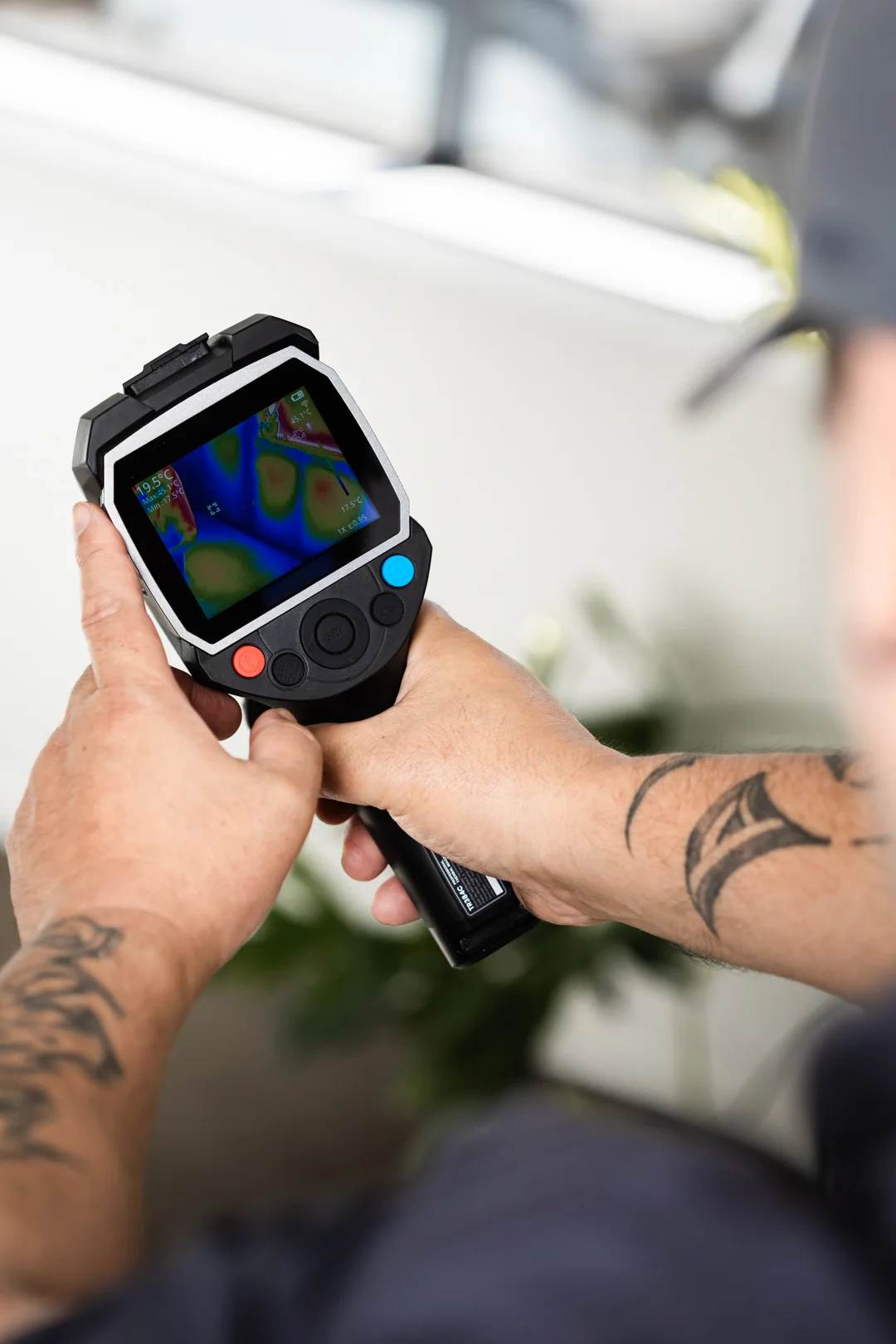
Thermal Imaging inspections for kiwi buildings
Detect what the naked eye cannot. Thermal imaging reveals hidden moisture, insulation gaps, and air leaks before they become expensive problems.
Some of the most significant issues in a building are the ones you cannot see. Moisture sitting behind a wall, insulation missing from a cavity, air leaking through gaps in the building envelope. Left undetected, these issues cause long-term damage and costly repairs. Thermal imaging gives you a view inside the building fabric that no standard visual inspection can provide.
How Thermal Imaging Works
A thermal imaging camera detects differences in surface temperature across a building. Moisture, air movement, and missing insulation all create temperature variations that show up clearly in thermal imagery, even when there is no visible sign of a problem to the naked eye.
During a thermal imaging inspection, your inspector systematically scans the interior and exterior of the property, capturing and documenting any areas of concern. All thermal images are included in your report alongside written findings and recommendations.

Detecting Water Damage
Moisture ingress and water damage behind wall and ceiling linings
Identifying Missing Insulation
Missing or poorly installed insulation in walls, ceilings, and floors
Revealing Problematic Gaps
Air leakage through gaps in the building envelope
Spotting Electrical Faults
Underfloor heating faults and electrical hotspots in visible switchboards and fittings
Uncovering Hidden Leaks
Active or historic plumbing leaks concealed within wall cavities, floor substrates, and ceiling spaces
Mapping Heat Loss
Areas of significant heat loss through the building envelope, including poorly performing windows, doors, and uninsulated structural elements